
23
Mar
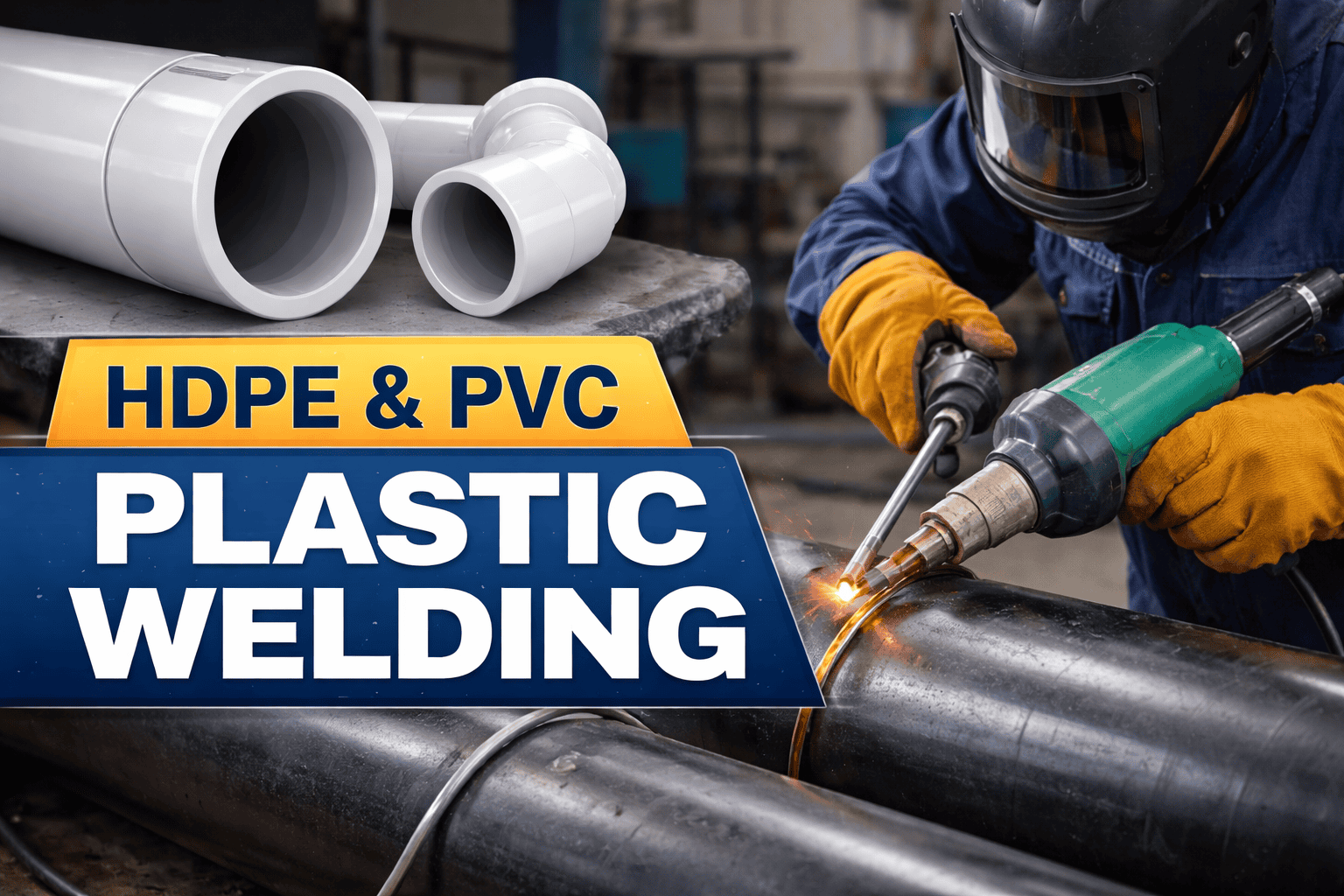
When a chemical processing plant in Mississauga develops a leak in its HDPE containment liner, or a municipal water authority in the GTA needs emergency repairs to PVC pipe manifolds, shutting down operations to transport components to a welding shop is not an option. Plastic welding, performed on-site by a certified specialist, is the fastest, most cost-effective solution for keeping industrial operations running.
RS Mobile Welding Service has provided plastic welding services across Toronto and the Greater Toronto Area for over 25 years. We specialize in HDPE (High-Density Polyethylene) and PVC (Polyvinyl Chloride) welding for industrial, municipal, and commercial applications, fully insured, WSIB covered, and compliant with Ontario safety and quality standards.
This guide explains what plastic welding is, which industries rely on it, what to look for in a certified contractor, and how Canadian regulations and climate conditions affect plastic welding projects in Ontario.
What Is HDPE and PVC Plastic Welding?
Plastic welding is the process of joining thermoplastic materials using heat, pressure, and a compatible filler rod, producing a continuous, watertight, and structurally sound bond. Unlike adhesive bonding or mechanical fastening, a properly executed plastic weld achieves up to 90% of the parent material’s tensile strength, making it the preferred joining method for pressure-rated piping, containment systems, and industrial tanks.
HDPE welding uses techniques such as butt fusion, electrofusion, and hot gas welding to join polyethylene components. HDPE is widely used in water distribution, gas piping, chemical containment, and geomembrane liner systems.
PVC welding — typically performed using hot gas (hot air) or extrusion welding — joins polyvinyl chloride components used in ventilation ductwork, wastewater piping, chemical tanks, and electrical conduit systems.
📊 According to Statistics Canada, the skilled trades sector employs over 2.4 million Canadians, with welding — including plastic welding — among the top 10 most in-demand industrial trades. Demand for certified plastic welders in Ontario has grown alongside the province’s infrastructure and water treatment expansion programmes. Read full.
Both materials require specialist knowledge. A welder inexperienced with thermoplastics can easily over-heat or under-heat a joint, creating weak seams that fail under pressure or chemical exposure. When in doubt, work with a certified welding contractor who can document weld quality and compliance.
Industrial Applications: Where HDPE and PVC Welding Is Used
Plastic welding is not a niche trade — it underpins critical infrastructure across Ontario’s industrial and municipal sectors. Understanding the specific demands of your application is the first step to specifying the right process and material.
Key industrial sectors served in the GTA and Ontario:
- Water and wastewater treatment: HDPE and PVC pipe systems, clarifier liners, chemical dosing tanks, and pump station manifolds. Municipal contracts in Ontario require welds compliant with CSA B137 thermoplastic pipe standards.
- Chemical and petrochemical processing: Acid containment tanks, scrubber ductwork, and chemical transfer piping, typically fabricated from PVC, CPVC, or HDPE rated for specific chemical compatibility.
- Mining and aggregate: HDPE geomembrane liner welding for tailings ponds and leach pads — critical for environmental containment. Requires certified extrusion and hot wedge welding operators.
- Food and beverage manufacturing: PVC and HDPE used in food-safe piping systems, drainage channels, and processing tank liners — must comply with NSF/ANSI 61 and Canadian Food Inspection Agency (CFIA) requirements.
- Construction and civil engineering: HDPE drainage and stormwater management systems, geosynthetic liner installations, and underground utility conduits.
Pro tip: For chemical containment applications, always specify the chemical concentration and operating temperature before selecting HDPE or PVC. At temperatures above 60°C (140°F), standard PVC loses significant structural integrity — CPVC or PVDF may be the appropriate specification. RS Mobile Welding can advise on material selection at the quoting stage.
📊 A 2023 BuildForce Canada report projects a shortage of over 80,000 skilled trade workers in Ontario by 2030. Certified plastic welders, particularly those qualified for HDPE geomembrane and pressure-pipe applications, are among the most difficult specialists to source in the province. Engaging a contractor early is strongly advisable for project-critical timelines.
For large-scale industrial fabrication or custom component manufacturing, our custom fabrication services offer integrated solutions, combining structural steel, stainless steel, and thermoplastic fabrication in a single mobilisation.
Different Plastic Welding Techniques: Choosing the Right Process
Not every plastic weld is the same. The correct technique depends on the material, wall thickness, joint geometry, operating conditions, and whether the work is performed in the shop or on-site. Here is a plain-language overview of the most common methods used for HDPE and PVC in Ontario industrial settings:
- Hot gas (hot air) welding: The most versatile method for PVC and HDPE sheet, plate, and pipe repair. A heated nitrogen or air stream softens the parent material and filler rod simultaneously, allowing hand or automated deposition. Suitable for tanks, ductwork, and custom shapes.
- Extrusion welding: A faster, higher-deposition technique where a continuously extruded bead of molten filler material is deposited into a prepared joint. Used for thick HDPE and PVC sections (above 6mm), including geomembrane panels and large-bore pipe spools.
- Butt fusion: The standard method for HDPE pressure pipe joining. Pipe ends are faced, heated against a plate, then pressed together under controlled force. Used in water distribution, gas, and industrial process piping. Requires a certified fusion machine operator.
- Electrofusion: A coupler fitting with embedded heating elements is energized to fuse fittings to pipe without external heat equipment. Preferred in tight-access installations and for qualifying welds under pressure-rated standards including CSA Z662.
- Hot wedge welding: Used for HDPE geomembrane liner installation. A heated wedge traverses the seam, fusing two overlapping membrane panels. Produces a dual-track seam that can be tested by air pressure inflation.
Pro tip: Always request a weld test coupon for critical pressure or containment applications. A 25mm coupon cut from a production weld can be tested for tensile strength and elongation before the system goes live, this is standard practice on Ontario infrastructure projects and should be specified in your contract.
For urgent or unplanned failures, our 24/7 emergency welding service can mobilise a qualified plastic welding specialist to your GTA or Ontario site within hours, minimising costly downtime.
What to Look for in a Certified Plastic Welding Contractor
Hiring the wrong contractor for a plastic welding job can result in joint failures, regulatory non-compliance, and costly remediation. Before engaging any welding service for industrial HDPE or PVC work, verify the following five qualifications:
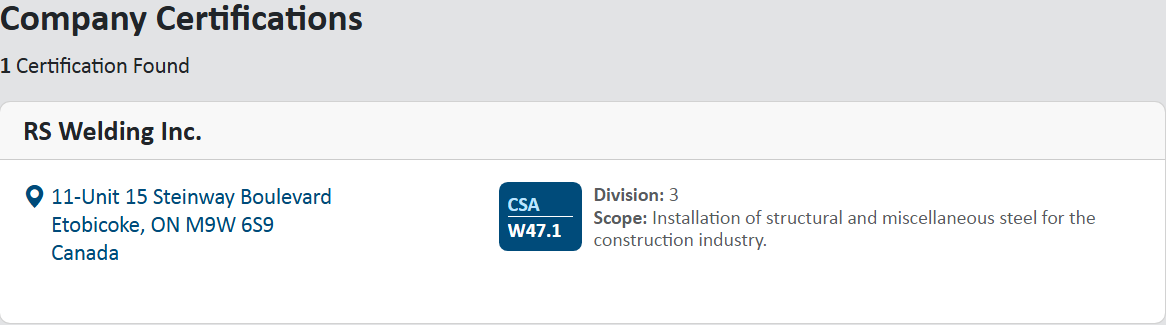
| ✓ | CWB certification (Canadian Welding Bureau) — confirms the company meets national quality management standards for welding operations under CSA W47.1. Ask to see the current certificate, not just a claim. |
| ✓ | WSIB clearance certificate — mandatory for all welding contractors working on Ontario job sites. A current Workplace Safety and Insurance Board clearance protects you from liability if a worker is injured on your property. Request a clearance number and verify it at wsib.ca. |
| ✓ | Plastic welding-specific qualifications — ask if the technician has completed manufacturer training for the welding equipment being used (e.g., Leister, Wegener, or McElroy fusion equipment). Certifications under AWS G1.10M (welding of thermoplastics) are an additional indicator of specialist competence. |
| ✓ | Liability insurance — minimum $2 million commercial general liability coverage is standard for Ontario industrial contractors. Request the certificate of insurance naming your company as additional insured for the project duration. |
| ✓ | Documented portfolio of relevant projects — ask for examples of similar applications (e.g., HDPE containment liner, PVC chemical tank, municipal pipe repair). A qualified contractor will have project photos, specifications, and client references available. |
📊 The Canadian Welding Bureau (CWB) certifies over 2,000 welding companies across Canada under CSA W47.1 and W47.2 standards. RS Mobile Welding Service maintains active CWB certification and WSIB coverage, with 25+ years of documented project history in the GTA and Southern Ontario.
Welding Thermoplastics in Ontario: Climate and Regulatory Considerations
Ontario’s climate and regulatory environment create specific challenges and requirements for plastic welding that do not apply in warmer jurisdictions, and that any credible contractor must account for in their work plan.
Cold weather welding:
HDPE and PVC become significantly more brittle in cold temperatures. Below 5°C (41°F), standard hot gas and butt fusion welding requires pre-heating of the parent material, extended temperature hold times, and enclosure or windbreak measures to maintain consistent melt temperature. Failure to control cold-weather conditions produces weld notches and stress concentrations that fail prematurely under load.
📊 Environment Canada data shows that Toronto experiences approximately 130 freeze-thaw cycles per year. Outdoor HDPE and PVC structures, including drainage systems, containment berms, and exposed pipe runs, are subject to repeated thermal contraction and expansion stresses that compound weld fatigue over time.
Ontario regulatory requirements:
For industrial piping systems, the Ontario Technical Standards and Safety Authority (TSSA) governs pressure equipment and piping under the Technical Standards and Safety Act. HDPE gas distribution systems must comply with CSA Z662, and pressure piping in industrial facilities is subject to ASME B31.3. Welds on regulated systems must be performed by qualified operators and documented with weld records.
For residential and light commercial applications, our residential welding services team handles smaller-scale plastic and metal repairs with the same compliance standards — WSIB covered and fully insured.
Conclusion: Why Certified Plastic Welding Matters for Ontario Industry
HDPE and PVC welding is precision work. The difference between a correctly executed butt fusion joint and a poorly made one is invisible to the eye but critical under pressure, chemical exposure, or freeze-thaw cycling. Three takeaways for Ontario facility managers and contractors: first, always verify CWB certification and WSIB clearance before any contractor begins work.
Second, specify the correct welding process, hot gas, extrusion, butt fusion, or electrofusion, based on your material, wall thickness, and operating conditions.
Third, plan ahead: Ontario’s projected skilled trade shortage means certified plastic welding specialists are increasingly scarce. Engage your contractor early.
RS Mobile Welding Service has served the GTA and Southern Ontario for over 25 years. We are CWB certified welding company, fully insured, WSIB covered, and available round the clock. Get a free project quote or view our full range of welding services to find the right solution for your application.
Frequently Asked Questions
Q: How much does plastic welding cost in Ontario?
Mobile plastic welding in the GTA typically starts at $250–$350 per visit for small repairs, with larger industrial projects quoted based on scope, material, access conditions, and certification requirements. HDPE geomembrane and pressure pipe projects involving certified fusion equipment are priced separately. RS Mobile Welding provides written quotes at no charge — contact us to describe your application and receive an accurate estimate.
Q: What is CWB certification and why does it matter for plastic welding?
CWB certification is issued by the Canadian Welding Bureau and confirms that a welding company meets the quality management and welder qualification requirements of CSA W47.1. For plastic welding, CWB certification signals that the contractor follows documented procedures, maintains qualified operators, and is subject to periodic third-party audits — critical for industrial and municipal projects where weld failure has safety and environmental consequences.
Q: How quickly can RS Mobile Welding respond to a plastic welding emergency in the GTA?
RS Mobile Welding offers 24/7 emergency response across the Greater Toronto Area and Southern Ontario. For urgent industrial failures — burst HDPE piping, cracked containment tanks, or failed PVC ductwork — we can typically mobilise a qualified technician within 2–4 hours. Contact us directly at any time for emergency dispatch.
Q: Can I repair HDPE or PVC piping myself without a certified welder?
Small-diameter PVC plumbing repairs using solvent cement are within the capabilities of a skilled tradesperson, but industrial HDPE and pressure-rated PVC welding requires certified equipment, qualified operators, and documented weld procedures, particularly on systems regulated by TSSA or subject to CSA standards. Improperly repaired industrial piping creates liability exposure and potential environmental violations. For any pressure-rated, chemical containment, or municipal application, a certified contractor is strongly recommended.
Q: Does RS Mobile Welding serve areas outside Toronto — including Brampton, Mississauga, and Scarborough?
Yes. RS Mobile Welding Service provides HDPE and PVC plastic welding across the full Greater Toronto Area, including Brampton, Mississauga, Scarborough, Markham, Vaughan, Ajax, Pickering, Oakville, and surrounding Southern Ontario communities. Our mobile units are fully equipped for on-site work at industrial facilities, municipal plants, and construction sites throughout the region.

RS Welding
" Raj and Khushmeet lead RS Mobile Welding Service with 25+ years of experience delivering expert welding and fabrication across Toronto and the GTA. Backed by Canadian Welding Bureau certification, their team handles everything from emergency repairs to custom metal work with precision, safety, and reliability. When you need mobile welding done right, RS gets it done."