
17
Mar
Whether you’re a seasoned professional fabricating stainless steel in-shop, a contractor doing on-site structural welding, or a hobbyist working on a project at home, your hands are your most valuable tools. Protecting them from the intense heat, sparks, and molten metal of the welding arc isn’t just a good idea—it’s non-negotiable. In Canada, where safety standards are rightly stringent, choosing the right pair of heat resistant welding gloves is your first and most important line of defense. Here at RS Mobile Welding Service, with over 25 years of experience serving Toronto and the Greater Toronto Area (GTA), we know that the quality of your work starts with the quality of your preparation—and that includes the safety gear.
This guide will walk you through all you need to know to select the perfect gloves for your welding style, ensuring you stay safe, comfortable, and in control, weld after weld.
Why Specialized Heat Resistant Welding Gloves Are a Must
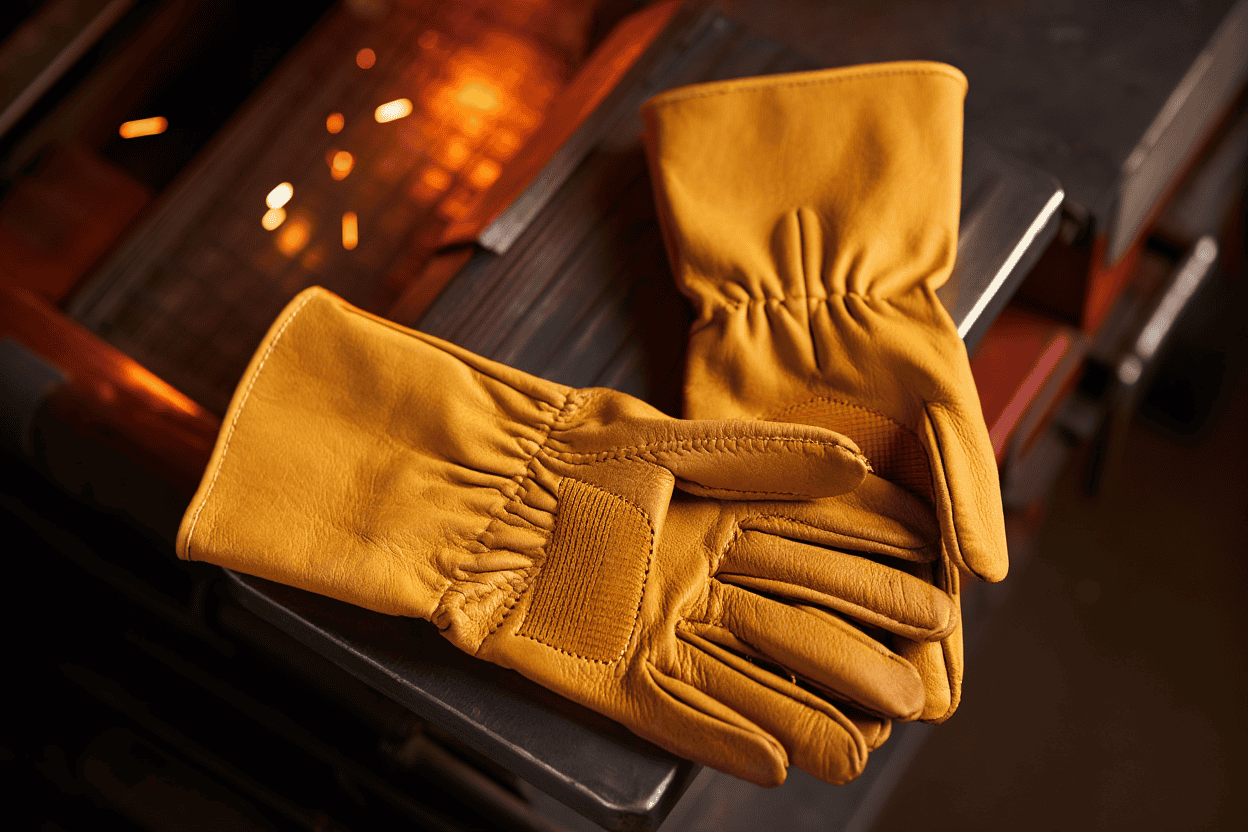
Trying to weld with a pair of general-purpose work gloves is like trying to fillet a fish with a butter knife—it’s the wrong tool for the job, and you’re likely to get hurt. Welding generates extreme temperatures—a single spark can exceed 1,000°F (538°C). Standard gloves offer no protection against this level of heat and can melt or ignite, causing severe burns.
Heat-resistant welding gloves are engineered to withstand this punishing environment. In Canada, the importance of using the right protective equipment is enshrined in safety standards. The Canadian Standards Association (CSA) standard W117.2: Safety in welding, cutting, and allied processes is the benchmark for workplace safety from coast to coast. This standard is referenced by provincial regulators, like Manitoba’s WSH Regulation, which mandates that employers provide appropriate PPE, including leather gauntlet-style gloves, to protect workers from sparks, molten metal, and radiation.
Wearing the correct gloves isn’t just about following rules; it’s about:
- Preventing Severe Burns – High-quality leather acts as a barrier against radiant heat, direct contact with hot metal, and showers of sparks.
- Protecting from UV Radiation – The welding arc emits harmful UV rays that can cause “welder’s flash” on your skin. Dense leather protects your hands and wrists from this radiation.
- Ensuring a Secure Grip – A good glove helps you maintain a steady hold on your torch, electrode, or workpiece, even in sweaty or challenging conditions, leading to better, safer welds.
Canadian Safety Standards for Welding Gloves
Before we dive into glove types, it’s crucial to understand the “why” behind the design. When shopping for welding gloves in Canada, keep these key standards in mind:
- CSA W117.2: This is the master document for welding safety in Canada. It outlines the requirements for protective equipment, including that gloves should be made of leather and offer protection from heat, flame, and electric shock.
- Provincial Regulations: Provinces like New Brunswick explicitly require that gloves for welding, cutting, or burning operations be of the “leather gauntlet type with arm protection”. This ensures your wrists and forearms are covered.
- ANSI/ISEA 105 (Performance Ratings): While not a Canadian government standard, you’ll often see this American standard on glove tags. It provides a performance rating for heat resistance, cut resistance, and puncture resistance. For example, a glove with an ANSI Level 2 contact heat resistance rating means it can withstand direct heat up to 500°F (260°C). This is a great benchmark for comparing glove capabilities.
Choosing the Right Glove for Your Welding Process
Just as you wouldn’t use a MIG welder for delicate TIG work, you shouldn’t use the same gloves for every process. The right glove balances heat protection with the dexterity you need. Let’s break it down, drawing on insights from safety experts and manufacturers.
MIG and Stick Welding Gloves: Built for Rugged Protection
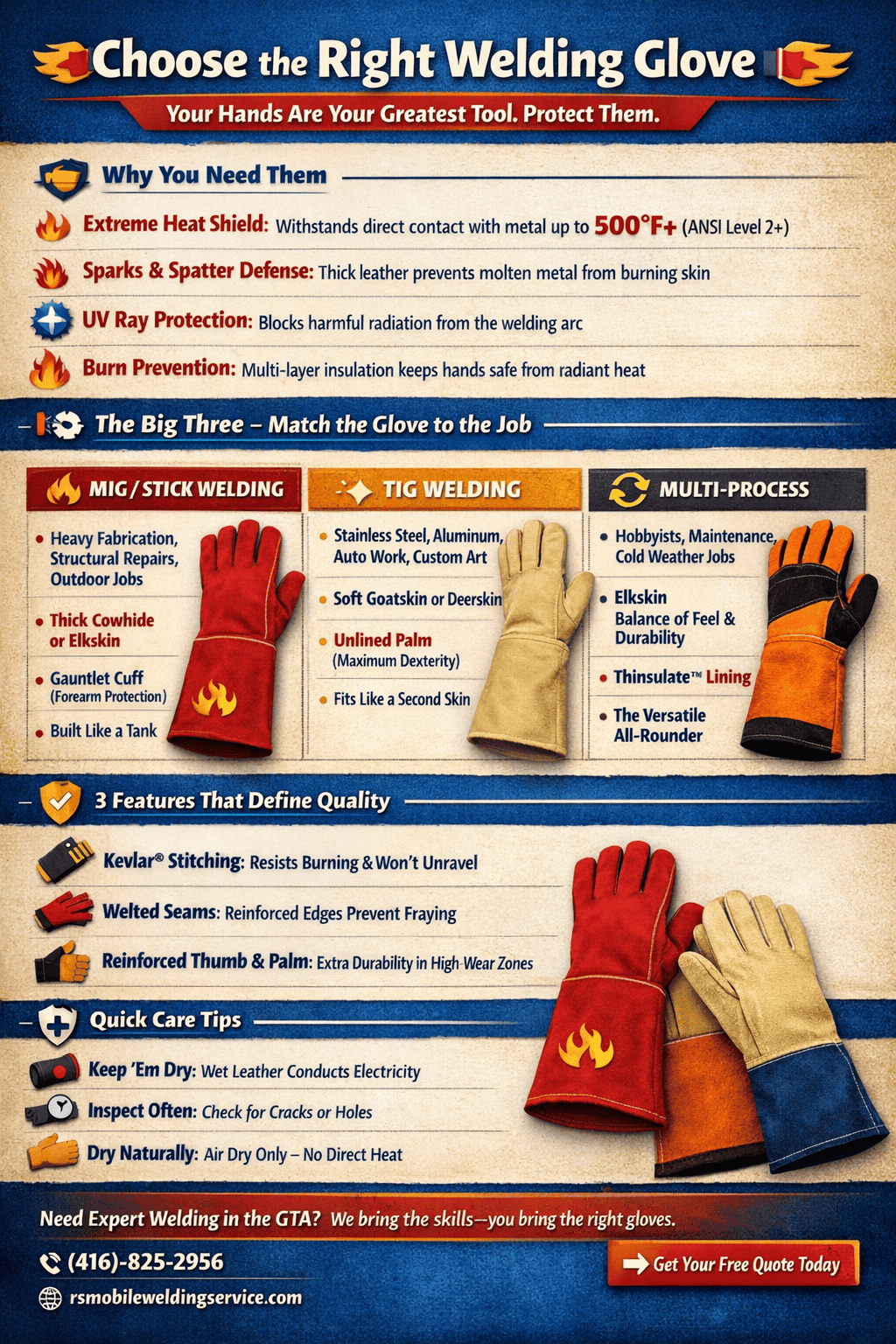
MIG (GMAW) and Stick (SMAW) welding are workhorse processes. They generate significant spatter, large sparks, and intense, widespread heat. For these jobs, you need a glove built like a tank.
- Key Features: Look for heavy-duty, thick leather—often elkskin, cowhide, or goatskin. Elkskin, like that used in Lincoln Electric’s Premium 8 Series, is prized for its excellent combination of heat resistance, comfort, and durability. These gloves feature multi-layer insulation in the palm and back of the hand to soak up the heat. Reinforced stitching with Kevlar® thread is a hallmark of quality, as it prevents seams from burning or unraveling when exposed to sparks.
- The Fit: They are intentionally bulky. You won’t have pinpoint sensitivity, but you’ll have the confidence to handle red-hot metal and withstand a shower of sparks. A gauntlet-style cuff (usually 4-6 inches long) is essential for protecting your forearms.
- Best For: Heavy fabrication, structural welding, repair work, farm equipment, and outdoor projects where ruggedness is key.
Expert Insight: At RS Mobile Welding, when our team is doing heavy structural work or on-site welding and repairs in Toronto and GTA, we always reach for a robust MIG/Stick glove. The reinforced palm and secure gauntlet are non-negotiable when you’re leaning into a hot joint and sparks are flying.
TIG Welding Gloves: Precision and Feel
TIG (GTAW) welding is an art form. It requires feeding filler rod with one hand while maneuvering a torch with the other, all with millimeter precision. The heat is intense but concentrated, and there’s minimal spatter. Your glove needs to be a second skin.
- Key Features: TIG gloves are made from softer, thinner leathers like deerskin, goatskin, or top-grain cowhide to maximize flexibility. Many are unlined or have minimal insulation in the palm to give you direct feedback from the torch. The Lincoln Electric MX Series, for example, features an unlined palm for better feel and top-grain leather on the thumb and forefinger for fine control. The focus is on dexterity, not just protection.
- The Fit: They fit snugly, almost like a dress glove. The cuffs are often shorter and may have an elastic wrist to keep the glove securely in place.
- Best For: Stainless steel fabrication, aluminum welding, automotive restoration, custom metal art, and any job where precision and control are paramount.
Expert Insight: For our stainless steel and aluminum fabrication projects in our CWB-certified shop, our welders rely on high-quality TIG gloves. The ability to feel the filler rod and maintain a steady arc is what separates a good weld from a great one.
The Versatile Option: Multi-Process Welding Gloves
If you switch between processes or need a glove that can handle a bit of everything, a multi-process glove is a great choice. These gloves aim to bridge the gap between the bulk of a stick glove and the finesse of a TIG glove.
- Key Features: They often use materials like elkskin, which offers a good balance of durability and flexibility. They might have a lined back for heat protection but a less bulky palm than a dedicated MIG glove. Some feature a Thinsulate™ liner for added warmth—a crucial feature for Canadian welders working in unheated shops or outdoors during our long winters.
- Best For: Hobbyists, maintenance workers, and professionals who perform a variety of tasks and need one reliable glove that can do it all.
Key Features to Look For: A Canadian Buyer’s Checklist
When you’re evaluating gloves, keep this checklist handy to ensure you’re getting a quality product that will last.
Material Matters
- Elkskin: The gold standard for a balance of softness, durability, and heat resistance. It remains supple even after getting wet and drying out
- Cowhide: The most common and economical choice. It’s very durable and offers good heat protection, but can be stiff initially.
- Goatskin/Deerskin: Extremely soft and flexible, making them ideal for TIG welding, but they may not last as long under heavy MIG abuse.
- HeatHide® Technology: Some modern gloves, like the HeatArmor® 5051, use advanced leather treatments to prevent the leather from getting brittle, shrinking, or stiffening with heat exposure, significantly extending the glove’s life.
Construction & Stitching
- Kevlar® Thread: This is a must-have. It’s inherently flame-resistant and incredibly strong, preventing your gloves from falling apart at the seams
- Welted Seams: This means the leather is folded over and stitched at the seams, creating a stronger, more durable bond that resists fraying and sparks
- Reinforced Stress Points: Look for extra layers of leather in high-wear areas like the palm, thumb saddle, and fingertips.
Lining & Comfort
- Unlined: Offers maximum dexterity and is preferred for TIG welding.
- Lined: Adds a layer of insulation for heat protection and comfort. Linings can be cotton, foam, or advanced materials like Thinsulate™ for cold-weather work.
- Moisture-Wicking: A feature that keeps your hands drier and more comfortable during long days in the shop.
Proper Care for Longevity and Safety
A good pair of welding gloves is an investment. To make them last, follow these simple care tips from the CCOHS:
- Keep Them Dry: Leather is a great electrical insulator when dry, but a conductor when wet. Always store your gloves in a dry place. Never use them if they are damp.
- Inspect Before Each Use: Check for cracks, holes, or worn spots that could let in heat or sparks. Pay close attention to the seams and the palm area.
- Clean Gently: Remove dirt and grime with a soft brush. If they need deeper cleaning, use a mild saddle soap specifically designed for leather. Avoid harsh detergents.
- Dry Naturally: If your gloves get wet, let them air dry at room temperature. Never put them on a heater or near an open flame, as this will cause the leather to become brittle and crack.
Conclusion: Equip Yourself with Best
Your hands are the bridge between your skill and the metal you’re shaping. Protecting them with the right pair of heat-resistant welding gloves is a fundamental part of being a professional. By choosing gloves that are appropriate for your specific welding process—whether it’s the rugged protection of MIG/Stick gloves, the precision feel of TIG gloves, or the versatility of a multi-process option—you’re not just complying with Canadian safety standards like CSA W117.2; you’re investing in your own safety, comfort, and the quality of your work.
At RS Mobile Welding Service, we understand the demands of the trade. From emergency mobile repairs in a Toronto snowstorm to precision TIG welding in our shop, having the right gear makes all the difference. We encourage you to assess your needs, use the checklist above, and choose a glove that will serve you well.
Ready to gear up or need expert advice on your next welding project? Whether you need professional on-site welding in the GTA or have a complex fabrication job, our certified team is here to help with honesty, integrity, and top-tier craftsmanship.
Contact RS Mobile Welding Service today for a free consultation or to request our on-site welding services. Let’s build something great together—safely.

RS Welding
" Raj and Khushmeet lead RS Mobile Welding Service with 25+ years of experience delivering expert welding and fabrication across Toronto and the GTA. Backed by Canadian Welding Bureau certification, their team handles everything from emergency repairs to custom metal work with precision, safety, and reliability. When you need mobile welding done right, RS gets it done right."