
28
Jan
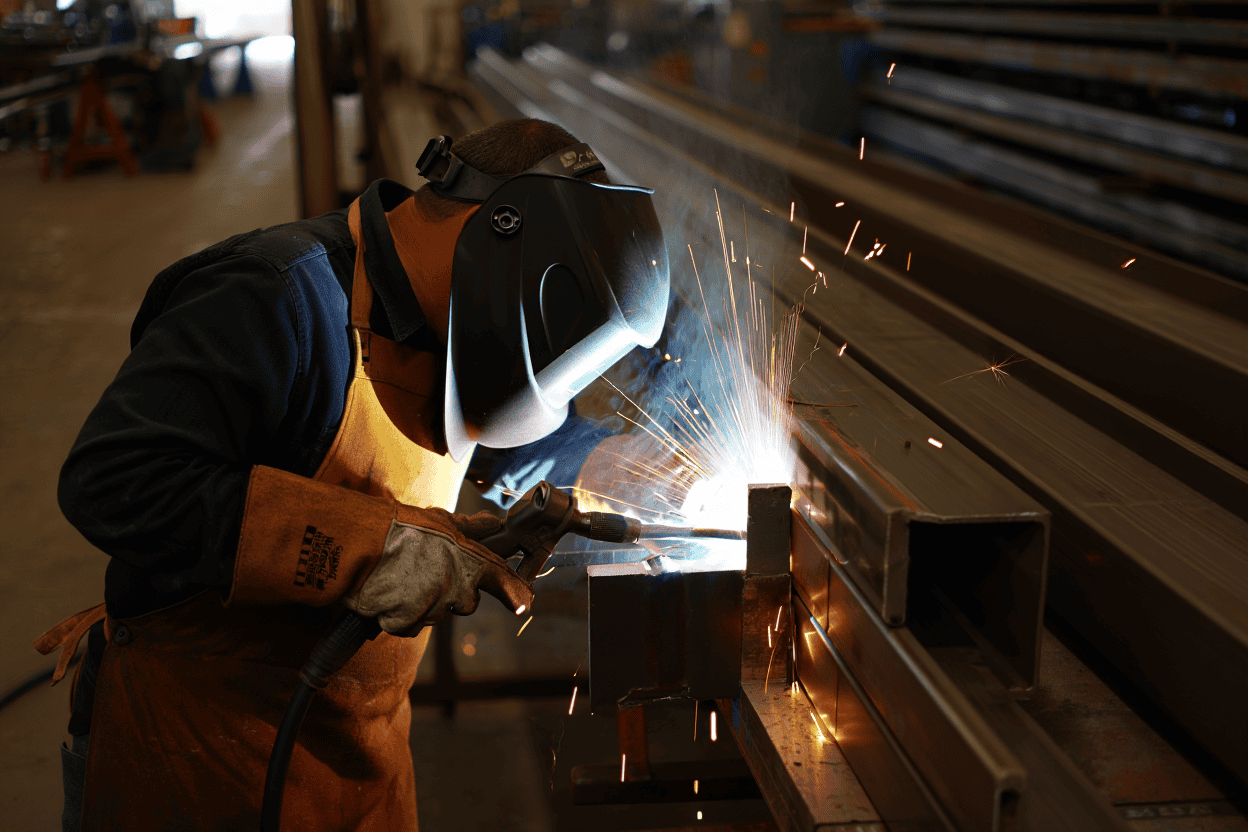
Ontario’s industrial and commercial sectors run on steel, literally. From manufacturing plants in Mississauga to warehouses in Brampton, energy facilities in Hamilton, and infrastructure projects across the GTA, professional welding and fabrication services are the backbone of safe, efficient, and scalable operations.
For B2B decision-makers, welding isn’t just a trade. It’s a strategic investment that affects structural integrity,
operational uptime, compliance, and long-term cost control. This guide breaks down everything Ontario-based businesses need to know about industrial and commercial welding and fabrication, backed by real-world insights, industry standards, and practical advice.
Understanding Welding and Fabrication in an Industrial Areas
Welding is the process of joining metals using heat, pressure, or both, while fabrication covers the broader
scope, cutting, forming, assembling, and finishing metal components into functional structures or systems.
In industrial and commercial environments, these services support:
- Structural steel frameworks
- Manufacturing equipment and machinery
- Storage systems, platforms, and mezzanines
- Piping, ducting, and material handling systems
- Custom-built components and retrofits
Unlike residential or light commercial work, industrial welding services demand higher precision, stricter tolerances, and compliance with Canadian safety and quality standards.
Why Ontario Businesses Rely on Professional Welding Services
Ontario is home to more than 40% of Canada’s manufacturing output, according to Statistics Canada. Industries such as automotive, food processing, logistics, construction, and energy depend heavily on reliable metalwork.
Key drivers of demand include:
- Aging infrastructure requiring reinforcement or replacement
- Automation and equipment upgrades
- Custom fabrication for specialized workflows
- Compliance with evolving safety regulations
A poorly executed weld can shut down production, compromise safety, or fail inspection—costing far more than the original job.
“In industrial settings, welding quality isn’t negotiable. One weak joint can cascade into downtime, liability, and lost revenue,” says a senior structural engineer with 20+ years in Ontario’s manufacturing sector.
Common Industrial & Commercial Welding Processes Used in Ontario
Different applications require different welding methods. Experienced Ontario welding contractors select processes based on material, load requirements, and environment.
MIG Welding (GMAW)
- Ideal for high-volume industrial production
- Clean, fast, and consistent
- Common in manufacturing and fabrication shops
TIG Welding (GTAW)
- High-precision welding for thin materials
- Used in food-grade, pharmaceutical, and custom fabrication
- Excellent finish and control
Stick Welding (SMAW)
- Durable and versatile
- Performs well outdoors and on structural steel
- Often used in construction and repair work
Flux-Cored Arc Welding (FCAW)
- High-strength welds
- Suitable for thick materials and heavy fabrication
- Common in structural and industrial applications
Industrial Fabrication Services: More Than Just Welding
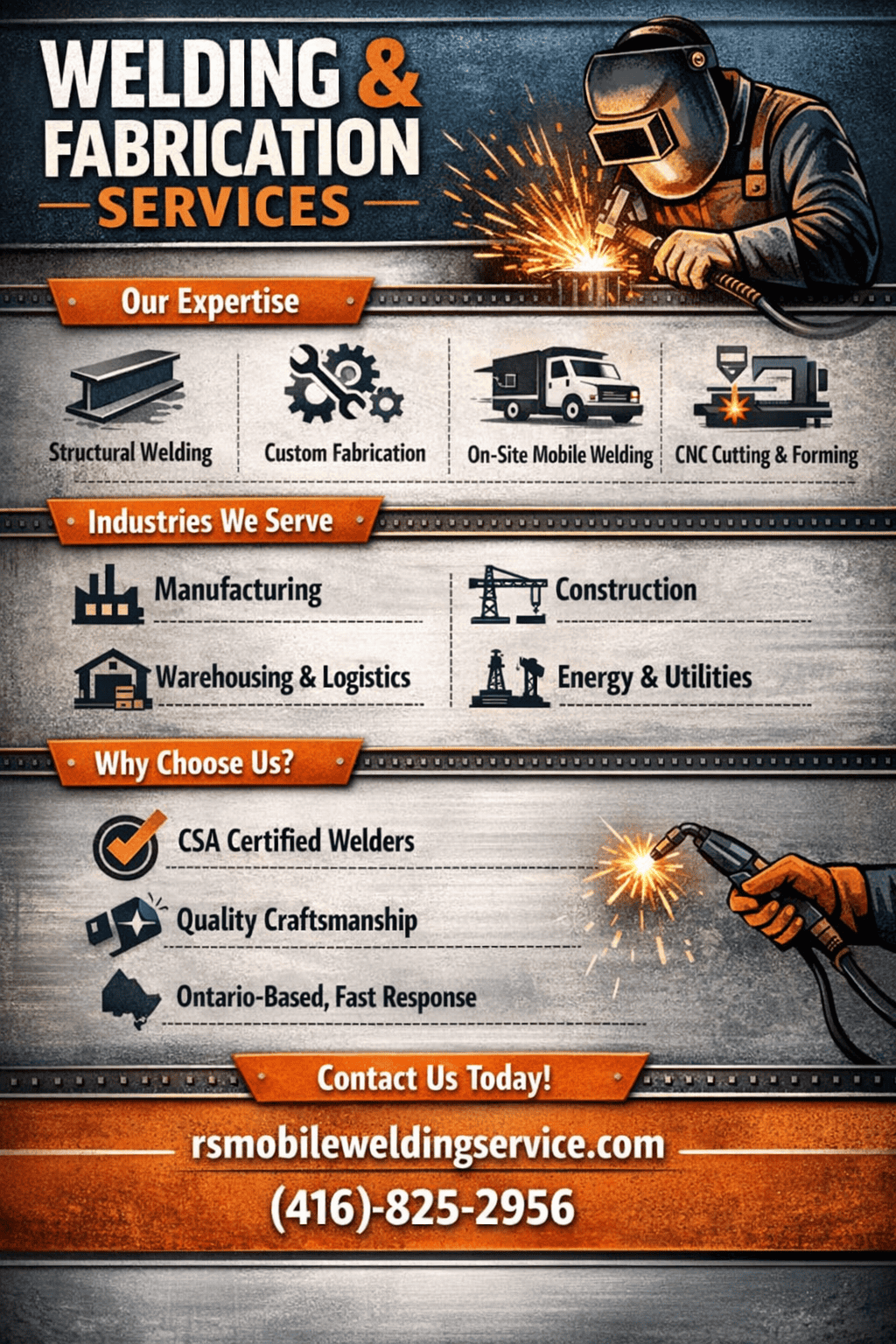
Fabrication services extend beyond joining metal. For Ontario B2B clients, full-service metal fabrication often includes:
- CNC cutting and plasma cutting
- Press braking and forming
- Structural steel fabrication
- Custom platforms, ladders, and guardrails
- Equipment frames and enclosures
- Retrofitting and modifications
Typical Industrial Fabrication Applications
| Industry | Common Fabrication Needs |
|---|---|
| Manufacturing | Machine frames, conveyor systems |
| Warehousing & Logistics | Racking, mezzanines, safety barriers |
| Construction | Structural steel, supports |
| Energy & Utilities | Piping, skids, enclosures |
| Food Processing | Stainless steel platforms, guards |
Compliance and Safety Standards in Ontario
Ontario businesses must ensure welding and fabrication work complies with national and provincial regulations.
Key standards include:
- CSA W47.1 / W47.2 – Certification of welding companies
- CSA W59 – Welded steel construction
- Ontario Building Code
- Ministry of Labour safety requirements
Working with CSA-certified welding contractors isn’t optional for most industrial projects, it’s a requirement for inspections, insurance, and liability protection.
How Quality Welding Impacts Operational Efficiency
High-quality industrial welding directly affects:
- Equipment longevity – Strong welds reduce fatigue and failure
- Safety – Proper joints prevent collapses and accidents
- Downtime – Fewer repairs and emergency shutdowns
- Scalability – Fabricated systems that support growth
Cutting corners on welding may save upfront costs but often results in higher long-term expenses.
Choosing the Right Welder and Fabricator in Ontario
For B2B buyers, selecting a welding service provider should go beyond price.
What to look for:
- CSA certification and documented procedures
- Proven experience in industrial and commercial projects
- In-house fabrication capabilities
- Understanding of Ontario regulations
- Ability to meet deadlines without compromising quality
Smart questions to ask:
- Have you worked with facilities similar to ours?
- Can you handle on-site and shop fabrication?
- How do you ensure weld quality and inspection readiness?
- What is your approach to safety and compliance?
Custom Fabrication vs. Off-the-Shelf Solutions
Many Ontario facilities face unique spatial, operational, or load challenges. Custom fabrication often outperforms generic solutions.
Custom-fabricated components offer:
- Better fit and integration
- Improved workflow efficiency
- Higher load ratings and durability
- Easier future modifications
For complex industrial environments, customization is often the most cost-effective option over the lifecycle of the asset.
Real-World Example: Warehouse Expansion in the GTA
A logistics company in the Greater Toronto Area needed to expand storage capacity without relocating. A
custom-fabricated mezzanine system was designed, welded, and installed to meet load and safety requirements.
Results:
- 35% increase in usable space
- Zero disruption to daily operations
- Full compliance with Ontario safety standards
This kind of outcome is only possible with experienced industrial fabrication and welding expertise.
Cost Factors in Industrial Welding and Fabrication
Pricing varies based on several factors:
- Material type (carbon steel, stainless steel, aluminum)
- Complexity of the design
- On-site vs. shop fabrication
- Inspection and certification requirements
- Project timeline
While it’s tempting to compare quotes alone, Ontario businesses should evaluate value, reliability, and risk
reduction.
The Future of Industrial Welding and Fabrication in Ontario
Ontario’s push toward automation, infrastructure renewal, and advanced manufacturing is increasing demand for high-precision, certified welding services. Technologies like robotic welding, CNC fabrication, and improved inspection methods are raising industry standards.
For B2B organizations, partnering with experienced welding professionals is becoming less about fixing problems, and more about enabling growth.
Final Thoughts: Invest in Welding That Supports Your Business
Industrial and commercial welding is not a commodity service. It’s a critical component of your facility’s safety, efficiency, and long-term performance.
Whether you’re expanding, upgrading equipment, or maintaining critical infrastructure, choosing the right welding and fabrication service provider in Ontario can protect your investment and keep operations moving forward.
Ready to move ahead?
If you’re planning an industrial or commercial project, now is the time to:
- Consult experienced RS welding professionals
- Assess your current infrastructure
- Explore custom fabrication solutions
Subscribe for more industry insights or connect with trusted Ontario welding and fabrication experts to discuss your project needs today. Need a cost-estimate for your welding or a fabrication services? Get Free Quote.
Frequently Asked Questions (FAQ)
1. What is the difference between industrial and commercial welding?
Industrial welding typically supports manufacturing plants, heavy equipment, and infrastructure where high load capacity and precision are critical. Commercial welding focuses on business facilities such as warehouses, distribution centres, and office buildings, often involving structural steel, platforms, and safety systems.
2. Why is CSA certification important for welding projects in Ontario?
CSA certification confirms that a welding company meets Canadian quality and safety standards. In Ontario, many industrial and commercial projects require CSA-certified welding to pass inspections, meet building codes, and satisfy insurance and liability requirements.
3. What types of welding are most commonly used in industrial facilities?
Industrial facilities commonly use MIG, TIG, stick, and flux-cored welding. The right process depends on material type, thickness, load requirements, and whether the work is performed on-site or in a fabrication shop.
4. Can welding and fabrication be done without disrupting operations?
Yes. Experienced Ontario welding contractors can perform on-site welding and fabrication while minimizing downtime by working in phases, following strict safety protocols, and coordinating around production schedules.
5. When should a business choose custom fabrication over standard solutions?
Custom fabrication is ideal when off-the-shelf components don’t fit spatial constraints, load requirements, or operational workflows. It offers better integration, durability, and long-term value for industrial and commercial environments.
6. How long do industrial welded structures typically last?
Properly designed and welded steel structures can last several decades. Longevity depends on material selection, weld quality, environmental conditions, and ongoing maintenance.
7. How do I choose the right partner in Ontario?
Look for CSA certification, relevant industry experience, a strong safety record, and the ability to handle both shop and on-site work. A reliable partner should understand Ontario regulations and provide clear communication throughout the project. Local welder near you providers often understand provincial regulations better, respond faster, and offer long-term support.

RS Welding
" Raj and Khushmeet lead RS Mobile Welding Service with 25+ years of experience delivering expert welding and fabrication across Toronto and the GTA. Backed by Canadian Welding Bureau certification, their team handles everything from emergency repairs to custom metal work with precision, safety, and reliability. When you need mobile welding done right, RS gets it done right."